
OUR INSIGHT
This book argues that you don't rise to the level of your goals; you fall to the level of your systems. Its central claim is that habits — not motivation, not willpower, not grand intentions — are the actual mechanism of change, because they're what you do repeatedly without thinking. The book breaks habit formation into four laws: make it obvious, make it attractive, make it easy, and make it satisfying. The deeper idea is that you shouldn't focus on the outcome you want; you should focus on becoming the kind of person for whom that outcome is natural. Identity-based habits work because every action is a vote for the type of person you're becoming. For someone building a process, the most useful shift is the emphasis on small. A habit that's too small to fail is more powerful than an ambitious plan you abandon, because the point isn't the size of any single action — it's that you showed up, and showing up repeatedly is what compounds. The goal isn't to do something big once; it's to do something small forever.
5 IDEAS TO TAKE WITH YOU
5 Ideas to Take With You
- 01
Systems beat goals
Goals set a direction; systems set the actual path. You don't rise to your goals, you fall to your systems.
- 02
Make it small
A habit too small to fail beats an ambitious plan you'll quit. The point is to show up, not to be impressive.
- 03
Identity drives behaviour
Every action is a vote for the kind of person you're becoming. Habits stick when they're tied to who you believe you are.
- 04
The four laws
Make cues obvious, the action attractive, the behaviour easy, and the reward satisfying. Shape the environment and the habit follows.
- 05
Compounding is the secret
Small gains look meaningless day to day but become dramatic over time. The power isn't in any single repetition.
MAKE IT PERSONAL
Make It Personal
The lesson becomes more powerful when you connect it to your own life.
What is one behaviour you keep wanting to do consistently that you keep not doing — and what's currently making it hard?
What in your environment is making the good behaviour difficult and the bad behaviour easy — and what could you redesign?
What is a version of the habit so small you can't fail to do it today, that you could repeat tomorrow and the day after?
START TODAY
Choose one behaviour you want to develop and shrink it to a version so small you can complete it today. Do it, and plan to do the same tomorrow.
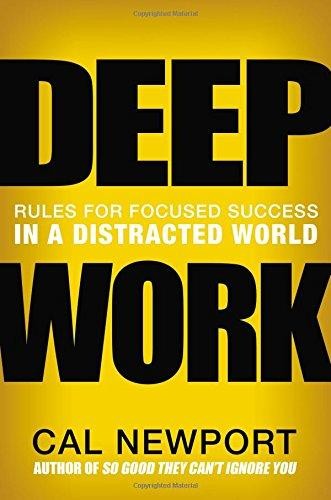
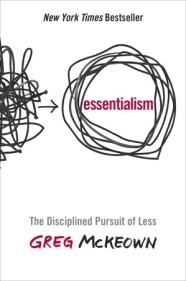
Book & Copyright Notice
Trust the Process does not provide, reproduce, or distribute the complete book through this website. The material on this page is independent educational commentary and reflection created to help visitors explore ideas related to the book. Book titles, cover artwork, author names, trademarks, and other protected materials remain the property of their respective rights holders. This page is not intended to replace the original work. To read the complete book, please obtain or access it through an authorized retailer, publisher, library, or other legitimate source.
Don't Just Read It. Apply It.
Choose one lesson. Answer one question. Take one action today.
Because knowing the lesson isn't the process. Living it is.
Watching someone else’s journey is only the beginning.
Every story has a process. Now it’s time to build yours. Take what you’ve learned, turn it into action, and start creating meaningful progress in your own life.
Enter Build the ProcessYour journey starts here
Turn inspiration into action.
Build the Process
Learn. Reflect. Take action. Build your process.
- Learn from real stories
- Get practical takeaways
- Take action in your life
- Track your progress
- Build a more intentional future