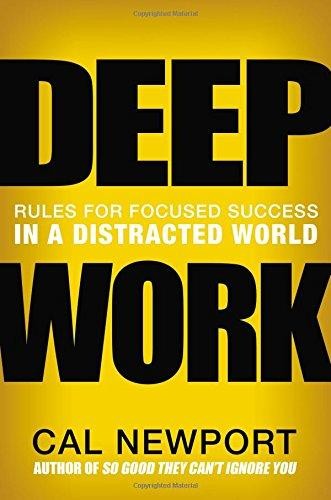
OUR INSIGHT
This book argues that the ability to focus intensely, without distraction, on a cognitively demanding task is becoming rare precisely because it's becoming valuable. In a world that rewards shallow, reactive work — emails, messages, the constant hum of notifications — the people who can still go deep have an outsized advantage. The book distinguishes deep work, the kind that pushes your abilities and creates real value, from shallow work, the kind that keeps you busy but produces little. Its claim is that deep work is a skill, not a personality trait, which means it can be trained — but only if you're willing to be uncomfortable, because concentration is harder than it looks and the pull toward distraction is constant. For someone building a process, the lesson is about protecting attention as if it were a resource, because it is. The work that moves you forward almost never happens in the fragments between replies; it happens in the stretches where you're unreachable and fully engaged with one thing.
5 IDEAS TO TAKE WITH YOU
5 Ideas to Take With You
- 01
Depth is a skill, not a trait
The ability to concentrate intensely can be trained. It's not something you either have or don't.
- 02
Shallow work feels productive
Being responsive and busy is easy to mistake for being effective. Most of it creates little lasting value.
- 03
Attention is a resource
Focus is finite and depletes. Protecting it is part of the work, not a break from it.
- 04
Ritualise the deep
Deep work happens when you make it a regular, defended practice, not when you hope to find time for it.
- 05
Embrace boredom
Constant stimulation trains your mind to need it. Allowing boredom rebuilds your capacity to concentrate.
MAKE IT PERSONAL
Make It Personal
The lesson becomes more powerful when you connect it to your own life.
How much of your workday is spent reacting to interruptions versus doing one hard thing without switching — and is that the balance you want?
What in your routine is training your mind to need constant stimulation, and what would change if you let yourself be bored more often?
What is one block of time today you could protect from all interruptions and give to a single demanding task?
START TODAY
Schedule one distraction-free period today — even thirty minutes — and put your phone somewhere you can't casually reach it. Do one hard thing in that window.
CONTINUE YOUR PROCESS
Continue Your Process
RELATED BOOKS

Book & Copyright Notice
Trust the Process does not provide, reproduce, or distribute the complete book through this website. The material on this page is independent educational commentary and reflection created to help visitors explore ideas related to the book. Book titles, cover artwork, author names, trademarks, and other protected materials remain the property of their respective rights holders. This page is not intended to replace the original work. To read the complete book, please obtain or access it through an authorized retailer, publisher, library, or other legitimate source.
Don't Just Read It. Apply It.
Choose one lesson. Answer one question. Take one action today.
Because knowing the lesson isn't the process. Living it is.
Watching someone else’s journey is only the beginning.
Every story has a process. Now it’s time to build yours. Take what you’ve learned, turn it into action, and start creating meaningful progress in your own life.
Enter Build the ProcessYour journey starts here
Turn inspiration into action.
Build the Process
Learn. Reflect. Take action. Build your process.
- Learn from real stories
- Get practical takeaways
- Take action in your life
- Track your progress
- Build a more intentional future